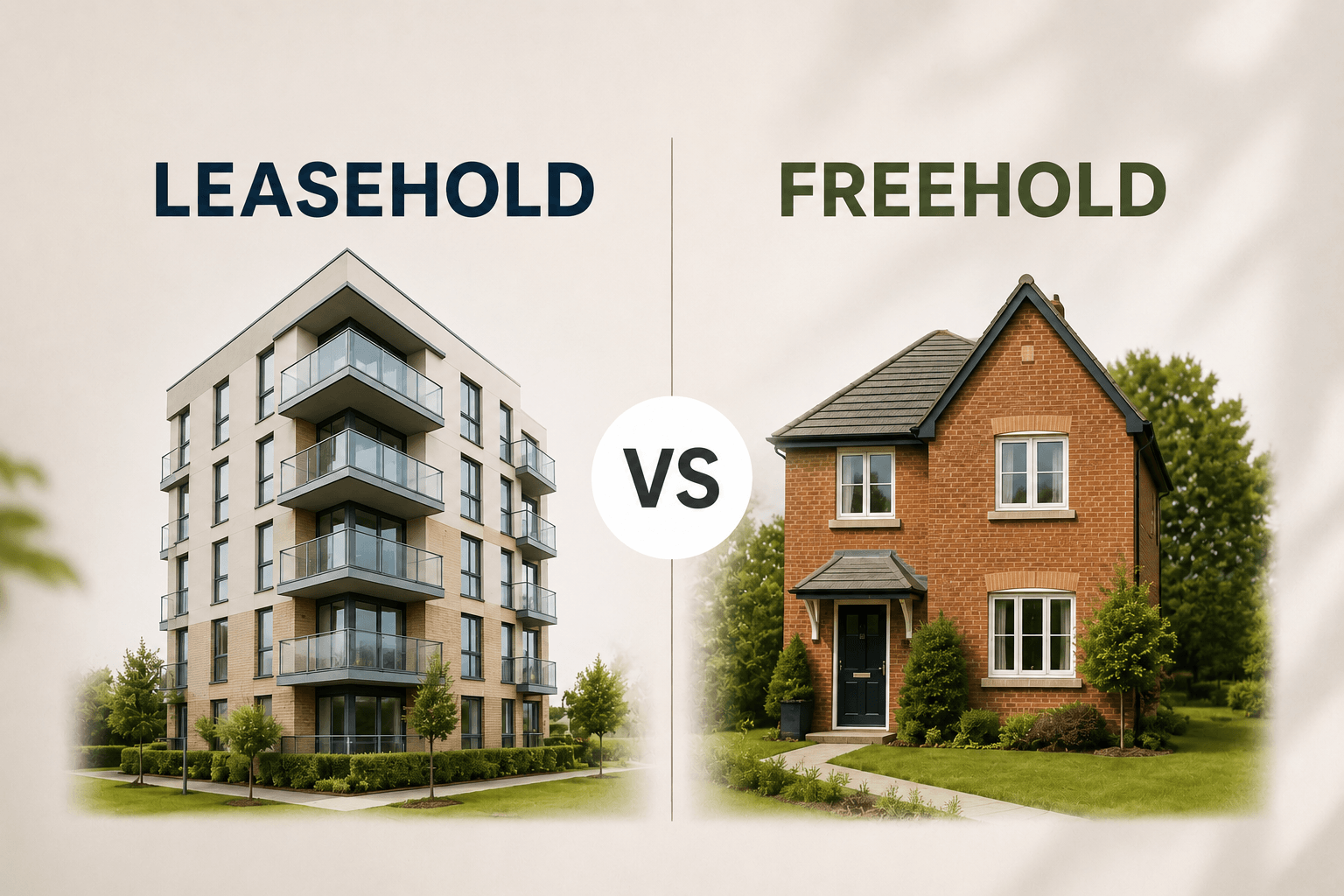
When buying a property in the UK, it is important to consider more than just the price, location, condition of the property and size of your deposit. Another important question is whether the property is Freehold or Leasehold.
These terms describe different forms of property ownership and can affect both your future costs and the mortgage process.
Understanding the difference is particularly important if you are buying your first property in the UK.
What Is Freehold?
Freehold generally means that you own the property and the land it stands on without a time limit on your ownership.
This type of ownership is commonly associated with houses.
As the owner, you are usually responsible for maintaining and repairing the property. There is normally no separate landowner whom you pay for the right to occupy the property.
However, even Freehold properties can come with certain obligations, restrictions or charges. This is why the legal documents relating to the specific property should always be carefully checked by your solicitor before the purchase is completed.
What Is Leasehold?
With Leasehold, you purchase the right to own and use a property for a specific period set out in a legal agreement called a lease.
The land and usually the building itself are owned by the freeholder.
Leasehold ownership is particularly common when buying flats in the UK.
A lease can have a very long term, for example more than 100 years. However, when buying a Leasehold property, it is important to check how many years are actually left on the lease.
The shorter the remaining term, the more questions it may create for both the buyer and the mortgage lender.
Why Does the Length of the Lease Matter for a Mortgage?
If you are buying a Leasehold property with a mortgage, the lender will assess not only your financial circumstances but also the property itself.
One factor that may be considered is the remaining length of the lease.
Different mortgage lenders have their own requirements regarding the minimum acceptable lease term. This means a property that meets one lender’s criteria may not necessarily be acceptable to another.
A shorter lease may:
- limit the number of suitable mortgage lenders;
- make obtaining a mortgage more complicated;
- require a lease extension;
- affect the future sale of the property.
For this reason, an attractive purchase price does not automatically mean that a property is the right choice.
What Additional Costs Can Come With a Leasehold Property?
Before buying a Leasehold property, it is important to understand any regular charges associated with it.
One of these may be a service charge.
Service charges can contribute towards the maintenance of shared areas and parts of the building, such as:
- hallways and staircases;
- lifts;
- the roof;
- the exterior of the building;
- communal grounds;
- other shared facilities.
The amount of service charge can vary significantly between properties.
There may also be other payments or financial obligations under the terms of the lease.
These should be checked before you complete the purchase so that you understand the real ongoing costs of owning the property.
What Else Should You Check Before Buying a Leasehold?
The number of years remaining on the lease is not the only factor to consider.
It is also important to find out:
- the current service charge;
- how often charges are reviewed;
- whether major works are planned for the building;
- whether there are restrictions for owners;
- what conditions apply if you want to rent out the property;
- whether there are restrictions on alterations;
- who is responsible for maintaining the building and communal areas.
For example, if major repair or renovation works are planned for the building, property owners may potentially face additional costs.
This is one of the reasons why your solicitor reviews the legal documents and lease terms during the property-buying process.
Can Leasehold Affect a Mortgage Application?
Yes.
A mortgage lender assesses both the applicant and the property that will act as security for the mortgage.
For a Leasehold property, the lender may consider the remaining lease term, specific lease conditions and characteristics of the property.
If the property does not meet a particular lender’s criteria, this could affect the mortgage application even if you have a good income, a strong credit history and a sufficient deposit.
It is therefore a good idea to tell your mortgage broker as early as possible that the property you are considering is Leasehold.
This allows the property type to be taken into account when identifying suitable lenders.
Which Is Better: Freehold or Leasehold?
It would be incorrect to say that Freehold is always the better option or that Leasehold should be avoided.
Many flats in the UK are sold as Leasehold properties and are successfully purchased with mortgages.
The important thing is to understand exactly what you are buying and what responsibilities come with the property.
Freehold generally gives the owner more control, but it can also mean greater responsibility for maintenance.
Leasehold may include the management and maintenance of communal areas, but the terms of the lease and associated costs need to be carefully considered.
What Should You Do Before Buying?
If you have found a suitable property, do not look only at its purchase price and estimated monthly mortgage payment.
Check whether the property is Freehold or Leasehold. If it is Leasehold, find out how many years remain on the lease, the service charge and any other important conditions.
A mortgage broker can help determine whether the property meets the criteria of potential lenders, while your solicitor will review the legal documents and ownership terms.
This article is for general information only and does not constitute legal advice. Legal matters relating to a specific property should be discussed with a qualified solicitor.

Planning to Get a Mortgage in the UK?
We can help you assess your options, estimate how much you may be able to borrow and identify a suitable mortgage solution.
Book a Consultation